
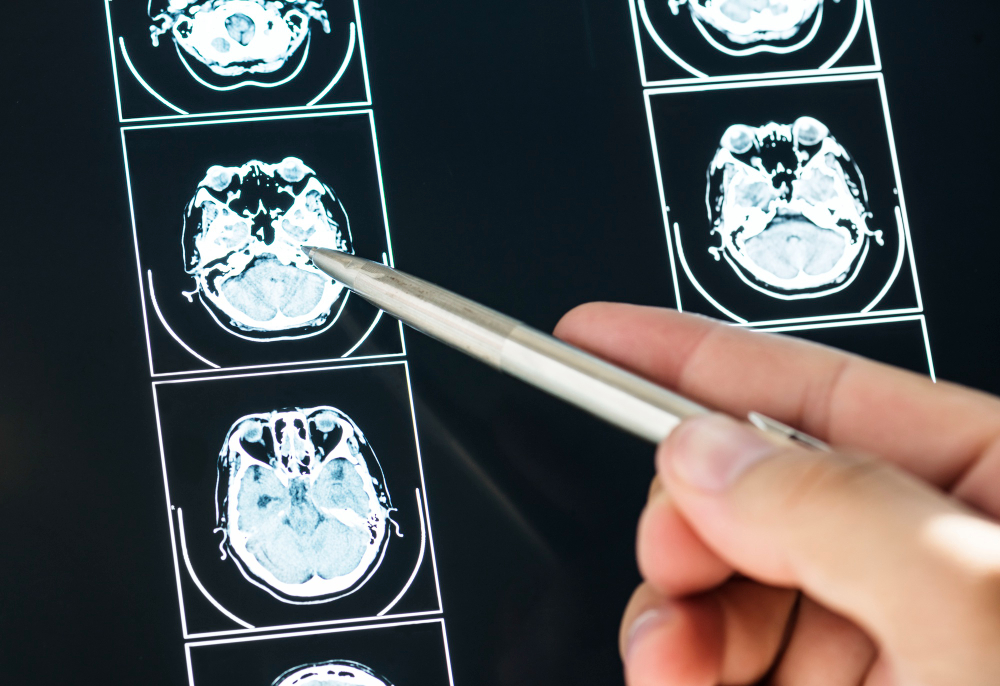
Post Concussion Syndrome Treatment in Reno, NV
If you or a loved one is still experiencing symptoms weeks, months, or years after a concussion, Gates Brain Health offers advanced neurological assessment and personalized rehabilitation to help you recover. Call (775) 507-2000 today.
Request an AppointmentPost Concussion Syndrome (PCS) has gained significant attention in recent years — particularly in contact sports, mountain sports such as snowboarding, skiing, and mountain biking, and increasingly in everyday trauma scenarios. Despite greater public awareness, PCS remains one of the most underrecognized and undertreated conditions in clinical medicine.
A concussion is defined as a mild traumatic brain injury (mTBI) caused by a blow to the head or a forceful jostling or whiplash motion that causes the brain to move within the skull. Contrary to common belief, a loss of consciousness is not required — most concussions occur in fully conscious individuals. The lasting consequences of a single concussion can persist for weeks, months, or even years, and are far more common than previously understood.
Symptoms of Post Concussion Syndrome
PCS symptoms are diverse and can include:
- Persistent headaches
- Dizziness and balance problems
- Fatigue that doesn’t resolve with rest
- Irritability and emotional dysregulation
- Anxiety
- Insomnia and sleep disruption
- Loss of concentration and memory difficulties
- Ringing in the ears (tinnitus)
- Blurry or visual disturbances
- Sensitivity to noise and light
- Digestive upset
- Rarely, decreased sense of taste or smell
Why PCS Persists — The Brain Adaptation Problem
The most important factor in chronic post-concussion syndrome is often not the injury to the inner ear or the initial brain trauma itself — it’s the fact that the brain has failed to adapt and compensate in the aftermath. Research has demonstrated that after a complete loss of vestibular nerve function, the brain should compensate within approximately 7 days. When symptoms persist for months or years, the question becomes: why is the brain not adapting?
This is the question Dr. Randall Gates is uniquely positioned to answer. Rather than simply ordering standard MRI and referring out, Dr. Gates uses state-of-the-art assessment tools to evaluate how specific areas of the brain are processing post-injury signals.
Advanced Diagnostic and Treatment Capabilities
At Gates Brain Health, PCS assessment includes:
- Videonystagmography (VNG): Computerized eye movement testing and caloric stimulation to identify which brain regions were affected by the concussion and how well vestibular signals are being processed
- Diffusion Tensor Imaging (DTI): Advanced MRI imaging that can detect white matter tract damage (axonal stretching and tearing) not visible on standard MRI — one of the most cutting-edge tools available for objective PCS assessment. Available through our Clinical Diagnostic MRI service.
- Volumetric MRI: Brain volume assessment to detect subtle structural changes following injury
- ImPACT Neurocognitive Testing: Standardized cognitive assessment to measure attention, memory, and processing speed post-concussion
Treatment is individualized and includes neuroplasticity-based rehabilitation exercises designed specifically for the areas of the brain affected, vestibular rehabilitation, dietary and supplementation support for brain healing, and HPA axis support for symptom-driven anxiety and fatigue. Our goal is to help post-concussion patients rehabilitate their brain and reclaim their life. Explore related areas including vertigo and dizziness, memory issues, and chronic fatigue.
Frequently Asked Questions About Post Concussion Syndrome
What is post concussion syndrome?
Post Concussion Syndrome (PCS) is a condition in which symptoms of a concussion — including headaches, dizziness, cognitive difficulties, fatigue, and mood changes — persist beyond the expected recovery period, typically defined as 3 months. PCS is more common than widely recognized and can significantly impair daily functioning, work performance, and quality of life.
Do you have to lose consciousness to get a concussion?
No. This is one of the most important misconceptions about concussions. A loss of consciousness occurs in only a minority of concussion cases. Most concussions happen while the individual is fully conscious — including from whiplash, direct impact without blackout, or forceful acceleration-deceleration of the head.
Why do concussion symptoms sometimes last for months or years?
Persistent PCS symptoms often indicate that the brain has not fully adapted and compensated following the initial injury. Rather than a persistent structural injury in most cases, chronic PCS reflects a failure of neurological adaptation — the brain’s circuits for processing vestibular, visual, and cognitive information remain dysregulated. Dr. Gates specifically targets this adaptation failure in his rehabilitation approach.
What is Diffusion Tensor Imaging and how does it help diagnose PCS?
DTI is an advanced MRI technique that measures how water moves through the brain’s white matter tracts, allowing detection of microscopic axonal injury — stretching or tearing of nerve fibers — that is completely invisible on standard MRI. This makes DTI one of the most valuable objective tools for documenting traumatic brain injury and guiding rehabilitation planning. It is available through Gates Brain Health’s Clinical Diagnostic MRI service.
How long does recovery from post concussion syndrome take?
Recovery time varies significantly based on the severity of the injury, the number of prior concussions, how long symptoms have been present before treatment begins, and individual neurological resilience. With appropriate assessment and targeted rehabilitation, many patients experience meaningful improvement within weeks to months. Early intervention generally produces faster and more complete recovery.
Does Gates Brain Health treat sports-related concussions?
Yes. Dr. Gates regularly evaluates and treats athletes and non-athletes of all ages who are experiencing persistent post-concussion symptoms. Whether the injury occurred in contact sports, a motor vehicle accident, a fall, or any other mechanism, the neurological evaluation and rehabilitation approach is individualized to the specific brain regions and functions affected.
How do I schedule a post concussion evaluation in Reno, NV?
Call (775) 507-2000 or request a free consultation online. Gates Brain Health is located at 5420 Kietzke Lane, Suite 209, Reno, NV . Telemedicine care is available for out-of-state patients following an initial in-person evaluation.